
Homeopathy for children with chickenpox, a worried parent’s guide
Homeopathy for children with chickenpox, a worried parent's guide
 Chickenpox tends to creep in without much warning, so your child may be a bit tired, irritable or off their food for a day, or have a temperature and seem not quite themselves. Then again, they may be charging around perfectly happily when you notice one suspicious-looking spot.
That first spot is often bigger and redder than you’d expect, and at this stage it’s easy to put it down to an insect bite or a pimple that came up overnight.
Then a second one appears, and over the next few hours, or sometimes by the following day, it becomes much clearer what you’re dealing with
How chickenpox develops
Chickenpox is caused by the varicella-zoster virus and is highly contagious. Symptoms usually appear one to three weeks after exposure, which is why it can seem to come out of nowhere.
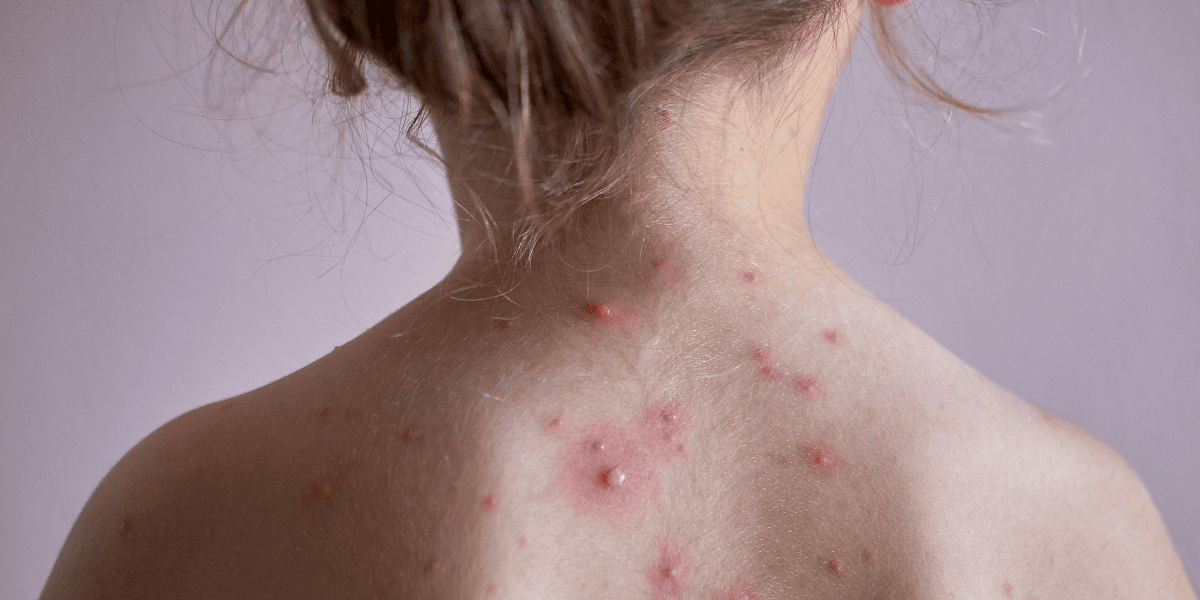
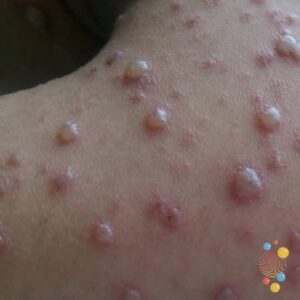
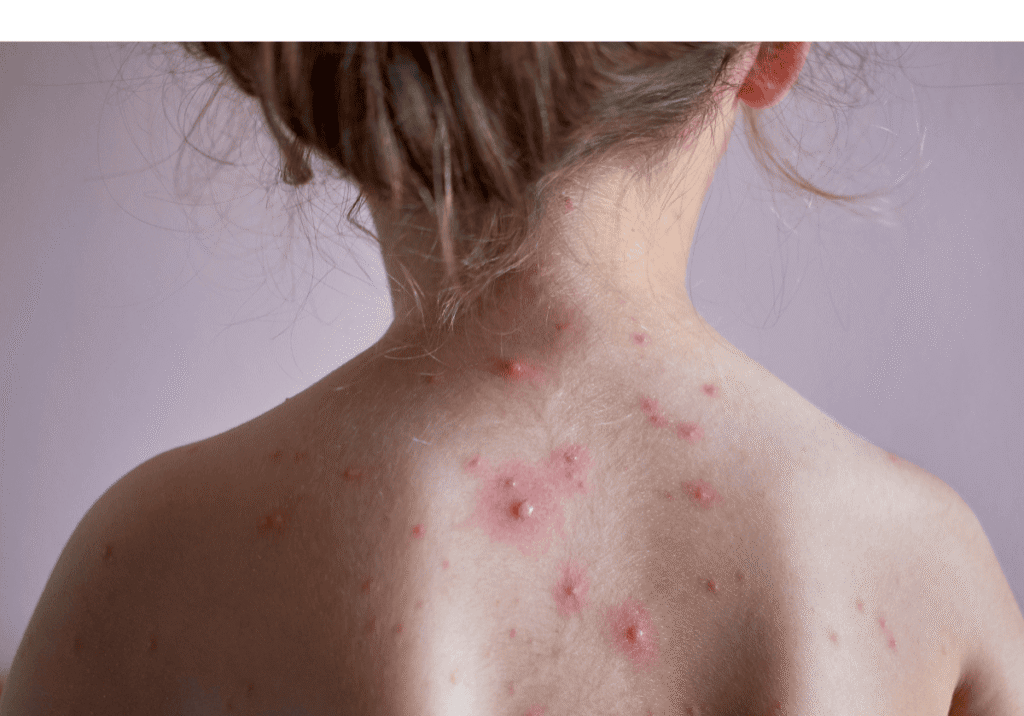
Rather than arriving everywhere at once, the spots come in crops, often starting on the chest, back, tummy, face or scalp before spreading more widely. Each red spot becomes raised and then turns into the fluid-filled blister that chickenpox is known for. They look a little like tiny bubbles or droplets sitting on the skin, usually with redness around them.
While the first spots are blistering or starting to dry, new ones can still be appearing elsewhere, so after a day or two you can often see every stage at once on the same child: fresh red spots, raised bumps, clear blisters, blisters drying out and older spots that have already crusted over.
Spots can turn up almost anywhere, including the scalp and inside the mouth, and while some children get very few, others seem to be covered from head to toe.
And then there’s the part most children find hardest, which is the itching.
Making those itchy days a little easier
Chickenpox can be intensely itchy, and warmth tends to make it worse. Loose, comfortable clothing stops fabric rubbing on the skin, and keeping the bedroom on the cool side may help your child settle at night.
A cool or lukewarm bath can be soothing too, and it’s sensible to keep fingernails short, especially with younger children who scratch without realising they’re doing it.
Plenty of fluids matter as well, particularly if there’s a temperature, and if there are spots inside the mouth, cool drinks and softer foods will be a lot more comfortable for a few days.
Where does homeopathy fit?
Chickenpox is a good example of why homeopathy doesn’t prescribe on the name of an illness alone.
We know the child has chickenpox, but what we still need to know is how this particular child is experiencing it.
For one child the main feature is relentless itching and restlessness.
For another it’s heat, and they’re flushed and feverish.
One becomes clingy and tearful, while another is tired and heavy and just wants to be left alone.
Those differences are what point us towards a remedy.
When itching and restlessness take over
Rhus toxicodendron is one of the remedies commonly considered for intensely itchy, blister-like eruptions. The child is often restless and can’t get comfortable, keeps moving and changing position, and finds it hard to settle to sleep because of the itching.
When the child is hot and feverish
Belladonna may come into consideration when the illness starts suddenly and dramatically. The child can be burning hot and flushed, with heat seeming to radiate off them, and they may be unusually sensitive and irritable while the feverish stage is at its most intense.
When they just want you
Pulsatilla often suits a very different child, one who is unusually clingy and tearful and wants cuddles and reassurance. They tend to dislike being too warm and often seem happier in cooler, fresh air.
When the child seems heavy and depleted
Antimonium tartaricum has traditionally been considered for chickenpox when the eruption is slow to develop and the child seems tired, heavy and generally quite poorly.
When heat makes the itching unbearable
Sulphur may be considered when itching and heat are the strongest features, particularly if the skin gets much more troublesome once the child warms up in bed.
The combination of symptoms is what gives us the homeopathic picture, not any one of them on its own, which is why a restless child with itchy blisters and a hot, flushed child with a high fever may need quite different remedies even though they have exactly the same diagnosis.
Watch your child, not just the spots
Because chickenpox is so visible, it’s easy to spend the week inspecting the rash, but try to notice the rest as well. Is your child hot or chilly? Restless or sleepy? Thirsty, or not interested in drinking? Do they want cuddles, or would they rather be left alone? Is the itching worse at night or once they get warm, and what seems to soothe them?
Those observations are far more useful for choosing a remedy than counting how many spots have come up.
As the spots begin to disappear
New spots can keep appearing for several days before the eruption finally stops, and then the blisters dry, crust and heal. Children need to stay off school or nursery until every spot has scabbed over, which is usually around five days after the first spots appear, though it can take longer.
Once the new spots have stopped and your child is starting to feel like themselves again, rest still matters, and a few quiet days are usually welcome after a week of broken sleep and scratching.
Homeopathic help when you need it, day or night
A homeopathy kit at home means you already have a useful selection of remedies ready when chickenpox appears, but the hard part is deciding which one fits, especially when the symptoms are a mix.
SWIFT Homeopathy Clinic offers homeopathy online, 24/7, so you can speak to a qualified homeopath for an acute consultation at 2am just as easily as on a weekday afternoon, wherever you are in the UK. We also include 48 hours of follow-up care, so you’re not left on your own once the consultation ends.
Please Note:
This information is for educational purposes only and is not a substitute for individual advice from a qualified homeopath or appropriate medical care. Homeopathic remedies should be selected according to the individual symptom picture rather than solely by the name of an illness. If symptoms are persistent, worsening, recurrent or you are concerned about your child, seek appropriate medical advice. In an emergency, contact the emergency services. If you're unsure which homeopathic remedy best matches the individual symptom picture, consult a qualified homeopath.
Explore more of our blogs.

Homeopathy for children with sore throats and tonsillitis. What does the throat tell us?
Homeopathy for School Anxiety
Homeopathy for children with chickenpox, a worried parent’s guide